Swimwear for Your Shape: A Confidence-First Guide
Quick Answer: Match the swimsuit’s structure to what your body actually needs: underwire and wide straps if you need support, ruffles and cutouts if you want to create shape, ruching and a good lining if you want smoothing. Then buy your true size — sizing down is the single most common reason a suit feels wrong.
Swimsuit shopping has ruined enough perfectly good afternoons.
Here’s the thing the fitting-room mirror never tells you: almost every “this doesn’t suit me” moment is actually a fit problem wearing a confidence problem’s clothes. Wrong size, wrong support, wrong structure. Change those three and the suit stops being a negotiation.

What Actually Makes a Swimsuit Feel Right?
Fit, then structure, then everything else. The goal isn’t disguise — it’s a suit so well fitted that you forget you’re wearing it twenty minutes into the day.
That’s not a soft sentiment; it’s a checklist. A suit that fits properly doesn’t need adjusting when you stand up, doesn’t ride up when you sit, and doesn’t require you to hold your arms a particular way. Once those things are true, you stop thinking about it, and that’s what actually reads as confidence in every photograph you’ll take.
So work in this order: true size first, then the support you need, then the design details you like. Most people do it backwards — falling for a print, then trying to make the fit work.
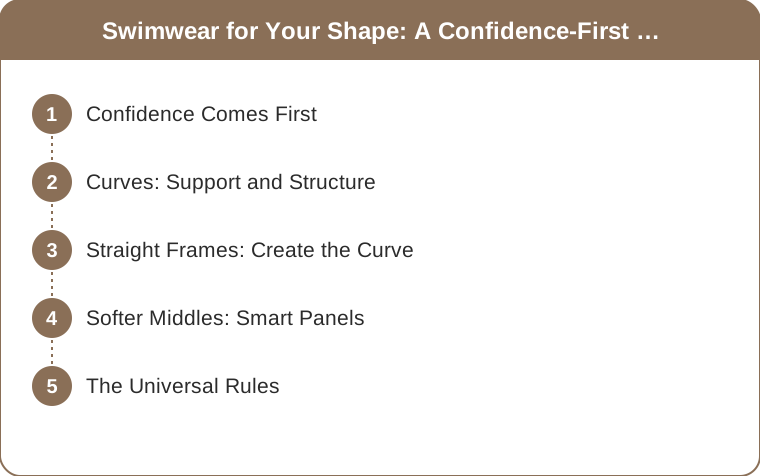
Curves: Support and Structure
If you’re carrying a fuller bust, structure is the whole game — and it’s the difference between a suit that works in the water and one that works only standing still.
Look for:
- Underwire or moulded cups, and ideally a suit sold in bra sizing rather than S/M/L. It’s a completely different fit experience.
- Straps at least 1 inch wide, adjustable, and ideally with a back clasp or a racerback option.
- A firm underband — that’s where the support actually comes from, not the straps.
- Higher-waisted bottoms with real coverage through the back, so nothing shifts when you move.
Wrap-front one-pieces and supported plunge styles are the most reliably flattering silhouettes here. Structure isn’t restriction — it’s what lets you actually swim.

Straight Frames: Create the Curve
If your hips, waist and bust measure close together, the job is adding dimension — and this is the shape with the most fun options.
- Ruffles and frills at the bust or hip create volume exactly where you want it.
- Cutouts at the waist carve in a waistline that the fabric otherwise runs straight past.
- Tie-side bottoms sit on the hip bone and add a horizontal line that reads as curve.
- High-cut legs lengthen the leg dramatically — the single biggest visual change available in swimwear.
- A belted one-piece invents a waist outright, which is exactly as effective as it sounds.
Texture helps too: seersucker, ribbed knits and terry all add visual volume that flat lycra doesn’t.
Softer Middles: Smart Panels
If you’d like the midsection smoothed rather than squeezed, the mechanism matters — a suit that compresses just moves the issue somewhere else.
- Ruched fronts are the most effective tool here. The gathered fabric skims rather than clings, and it’s forgiving across a whole day of eating and sitting.
- Wrap and surplice details cross the body diagonally, which breaks up the horizontal line.
- A proper power-mesh lining does more than any amount of thick fabric.
- Plunge or V necklines draw the eye vertically and upward.
Skip anything with a tight horizontal seam across the waist — that’s the one detail that consistently works against you.
5 Mistakes Everyone Makes Buying Swimwear
1. Sizing down. The most common error by a distance. A too-small suit creates the exact lines it’s meant to smooth, and it will feel worse every hour. Buy your true size.
2. Not testing seated. Sit, reach overhead, bend forward. Half of all swimsuit problems only appear in one of those three positions, and none of them happen while you stand still facing a mirror.
3. Ignoring adjustability. Adjustable straps, ties and clasps let one suit fit you across a whole summer of small changes. Fixed-strap suits fit you on exactly one day.
4. Buying five compromises instead of two good ones. Two suits you genuinely like get worn all summer. Five nearly-right ones sit in a drawer.
5. Judging it under fitting-room lighting. That lighting is famously terrible and nobody has ever looked good under it. Judge on fit and feel, not on the mirror.
Mini FAQ
How should a swimsuit fit?
Snug but not compressive — you should be able to slide two fingers under the straps and the leg openings without strain. Nothing should dig in, and the fabric shouldn’t gape at the bust or back. It’ll loosen slightly when wet, so a suit that’s already loose dry will be too big in the water.
What swimsuit style is most flattering?
There isn’t one universal answer, which is genuinely good news. Well-fitted structure flatters a fuller bust, texture and cutouts flatter a straighter frame, and ruching flatters a softer middle. The most flattering suit for anyone is the one in their actual size with the support they actually need.
How do I stop my swimsuit riding up?
Usually it’s a size or cut issue rather than a fabric one. Bottoms that ride up at the back are often too small or cut too narrow for your hip shape — try a fuller cut or size up. For one-pieces, check the torso length; long-torso versions exist and solve this instantly for taller frames.
TL;DR
- Buy your true size first; sizing down causes most swimsuit misery.
- Fuller bust: underwire, wide adjustable straps, firm underband, bra sizing if possible.
- Straighter frame: ruffles, cutouts, tie-sides, high-cut legs, belted one-pieces.
- Softer middle: ruching, wrap details, power-mesh lining, V necklines.
- Test the suit sitting, reaching and bending — not just standing.
- Two suits you love beat five you tolerate.
Get the fit right and the suit disappears — which frees you up to enjoy the actual water.
Keep Reading
This article is for general styling and informational purposes only. Trends, sizing, availability and pricing may vary by brand and season.