Style Your Shape

Dressing for your body, whatever the shape

How to Dress for Your Body Shape (And Feel Amazing)

2026-07-11

Quick Answer: Dressing for your body shape means identifying your natural proportions (hourglass, pear, apple, rectangle, inverted triangle), then dressing to balance — not restrict — them. Define your waist where it helps, and let confidence override any rule you don’t love.

Dressing for your body shape isn’t about rules or restrictions — it’s about understanding what balances and flatters your unique proportions so you can feel amazing in everything you wear. Once you know your shape, shopping and styling get so much easier. Here’s your guide.

How to Dress for Your Body Shape (And Feel Amazing)

What are the basic body shapes, and how do you identify yours?

Most bodies lean toward a few general shapes — hourglass, pear, apple, rectangle, inverted triangle — each defined by how your shoulders, waist, and hips relate to one another. Identifying yours is simply about noticing your natural proportions, not judging them. It’s a starting point for smarter shopping, not a box you’re stuck in.

Styling flat lay

What does it actually mean to “dress to balance” your shape?

Creating harmony between your top and bottom halves. Add volume where you want more, define where you want shape, and draw the eye to your favorite features. A pear shape might add interest up top with a statement sleeve or neckline; an inverted triangle might add volume below with a fuller skirt. Balance, not concealment, is the goal.

How to Dress for Your Body Shape (And Feel Amazing)

Does defining your waist actually matter for every body shape?

For most shapes, yes. Defining the waist — through belts, wrap styles, high-waisted bottoms, or tailored pieces — creates a flattering, balanced silhouette across nearly every shape category. It’s one of the most universally flattering styling moves there is, giving structure and shape to almost any outfit regardless of your specific proportions.

Should you ever ignore body-shape advice entirely?

Absolutely, and often. Understanding your shape is a helpful tool, not a life sentence. If you love something that “breaks the rules” for your shape category, wear it with confidence — that’s exactly what makes it work. The goal is always feeling amazing, and confidence trumps every guideline on this list.

Style guide

Myth vs. Fact: Dressing for Body Shape

Myth: Certain silhouettes are strictly “off-limits” for certain body shapes. Fact: Shape guides are starting points for balance, not restrictions — confidence and fit matter more than following every rule.

Myth: Waist definition only flatters hourglass shapes. Fact: Waist definition is one of the most universally flattering moves across nearly every body shape category.

Myth: You have to pick one shape category and only shop for that. Fact: Most bodies are a blend, and personal preference should always outweigh a rigid category label.

5 Mistakes Everyone Makes Dressing for Body Shape

  1. Treating shape categories as strict rules instead of starting points. They’re meant to guide balance, not restrict what you’re allowed to wear.
  2. Skipping waist definition because “it’s for hourglass shapes only.” It flatters nearly every shape category, not just one.
  3. Forcing yourself into one exact shape label. Most bodies blend categories — the balancing principle matters more than the exact label.
  4. Hiding proportions instead of balancing them. Concealing under shapeless clothes usually adds visual bulk rather than removing it.
  5. Ignoring personal preference in favor of a “correct” silhouette. Confidence in a piece you love outperforms technically “correct” advice you don’t feel good in.

FAQ

How do you figure out your body shape if you’re between categories?

Most bodies are a blend — focus on which general balancing principles (adding volume, defining the waist) make you feel best rather than forcing yourself into one exact label.

Is body-shape advice outdated or still useful?

The underlying principle — creating visual balance and highlighting favorite features — still holds up; it’s the rigid “must” and “must never” language around it that’s worth ignoring.

What’s the fastest way to start dressing for your shape?

Start with waist definition — a belt or wrap style on pieces you already own is the single quickest way to test whether the “dress to balance” principle works for you.

No — most trends can be adapted to balance your proportions with small adjustments (a belt, a different length), rather than needing to be skipped entirely because of a shape guideline.

Does body shape change over time, and should your styling change with it?

Yes, bodies shift with age, life stages, and other factors — revisiting which balancing principles feel right every so often keeps your styling working with your current proportions rather than an outdated read of your shape.

TL;DR:

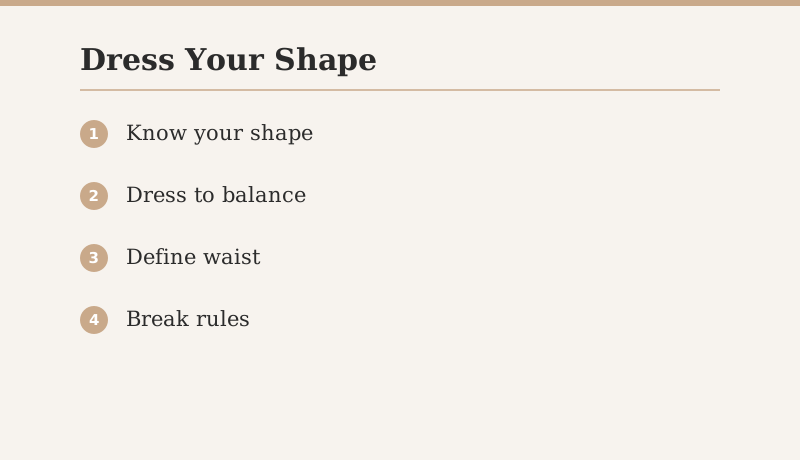
  • Identify your natural shape as a starting point, not a restriction
  • Dress to balance: add volume or definition where you want it
  • Waist definition flatters nearly every shape
  • Confidence and personal preference override any styling “rule”

Dressing for your body shape is about balance and celebration, not restriction. Understand your proportions, dress to create harmony, define your waist, and never let guidelines override what makes you feel amazing. Know your shape, then wear whatever makes you feel your best.

Keep Reading

This article is for general styling and informational purposes only. Trends, sizing, availability and pricing may vary by brand and season.

← All articles